
How are property prices determined?
Key Factors Influencing Property Valuations
The price of a property is not determined by chance. It is the result of a combination of objective facts and subjective perceptions – and is ultimately driven by one central question: How much is a buyer willing to pay for this property? This article explains the factors that most significantly influence real estate prices in Switzerland and how they are systematically combined into a market value assessment.
The Buyer’s Decision: Comparing, Evaluating, Deciding
Buyers compare multiple properties, different locations, varying conditions, and asking prices. In doing so, they consciously or unconsciously assign a certain value to each aspect of a property.
Some characteristics are easy to quantify, such as living space or plot size. Others are more difficult to define: the feeling when entering a room, the architecture, or the overall harmony of a home. Both objective and subjective impressions influence a buyer’s decision.
The result is an overall impression that translates into a willingness to pay. This is precisely where professional property valuation begins: it aims to estimate, as accurately as possible, the expected willingness to pay of an average buyer based on experience, market data, and comparable transactions.

“When valuing a property, I bring together all relevant pricing factors to estimate the expected willingness to pay of an average buyer as accurately as possible. This allows me to position your property at the right price in the market.”
Stephanie Komminoth, Real Estate Agent
Location: The Most Important Price Factor
No characteristic influences property prices as strongly as location. In property valuation, a distinction is made between macro-location and micro-location.
Macro-Location: The Region Matters
Macro-location refers to the broader geographical setting of a property – the canton, city, or municipality in which it is located. It includes factors such as economic strength, tax rates, accessibility, infrastructure, and overall quality of life.
Property prices vary considerably across Switzerland. Particularly sought-after macro-locations include:
• Canton of Zug: Low taxes, strong purchasing power, and proximity to Zurich make it one of Switzerland’s most desirable – and expensive – regions.
• Municipalities along Lake Zurich (Küsnacht, Zollikon, Herrliberg): Prestigious locations with correspondingly high prices.
• Lake Geneva region (Geneva, Lausanne): International demand and limited supply drive prices upward.
• Lucerne and Central Switzerland: Attractive natural surroundings with generally more moderate prices than Zurich or Zug.
Less sought-after macro-locations – for example, peripheral municipalities in the Jura region or structurally weaker areas in Valais – typically command lower prices per square metre, even when properties have otherwise identical characteristics.
Micro-Location: The Immediate Surroundings Make the Difference
Within the same municipality, two properties can achieve significantly different prices solely due to their micro-location. Micro-location describes the immediate environment: traffic noise, views, sunlight exposure, neighbourhood quality, and proximity to shopping, schools, and public transport.
Example of a desirable micro-location: A detached house on a hillside in Unterägeri – quiet residential street, unobstructed views of Lake Ägeri, south-facing orientation, and a ten-minute walk to the village centre. Such characteristics justify a substantial price premium.
Example of an inferior micro-location: A comparable property in the same municipality situated directly on a busy road, with a north-facing orientation and no distant views. Despite having identical living space, buyers’ willingness to pay is noticeably lower.
It is important to note that around 80% of residential properties in Switzerland are neither in prime nor poor locations. Most are situated within the average range for both macro- and micro-location, making them relatively easy to compare.
Building Age and Architectural Style
The age of a property affects its value in two ways.
Firstly, through renovation requirements. Older buildings often require investment in heating systems, insulation, plumbing, or electrical installations. Buyers anticipate these costs and consciously or unconsciously deduct them from their willingness to pay.
Secondly, architectural style plays a role. Design preferences change over time. Properties built in the 1970s and 1980s with small bedrooms or outdated materials are generally less sought-after than homes featuring contemporary architecture. Exceptions include well-preserved properties with distinctive character and a strong architectural identity.
Space: More Is Better – But Not Proportionally
Size matters. Larger plots and greater living space clearly increase the overall value of a property. However, the price per square metre generally decreases as size increases.
A 200 m² apartment does not cost twice as much as a 100 m² apartment. While it is worth more overall, its price per square metre is typically lower. The same principle applies to land: larger plots tend to be valued at a lower rate per square metre than smaller, well-proportioned plots in the same location.
Of course, not only the size but also the quality of the space matters. An 800 m² plot with a south-facing garden is significantly more valuable than an equally sized plot with a north-facing orientation or an unfavourable shape. Zoning regulations and development potential also influence value. As densification policies evolve, permitted building volumes may differ from those in place when the property was originally purchased, affecting its market value.
Condition: Kitchens and Bathrooms Shape First Impressions
The condition of a property influences both its rational and emotional value. Buyers identify renovation needs and often factor estimated costs into their willingness to pay.
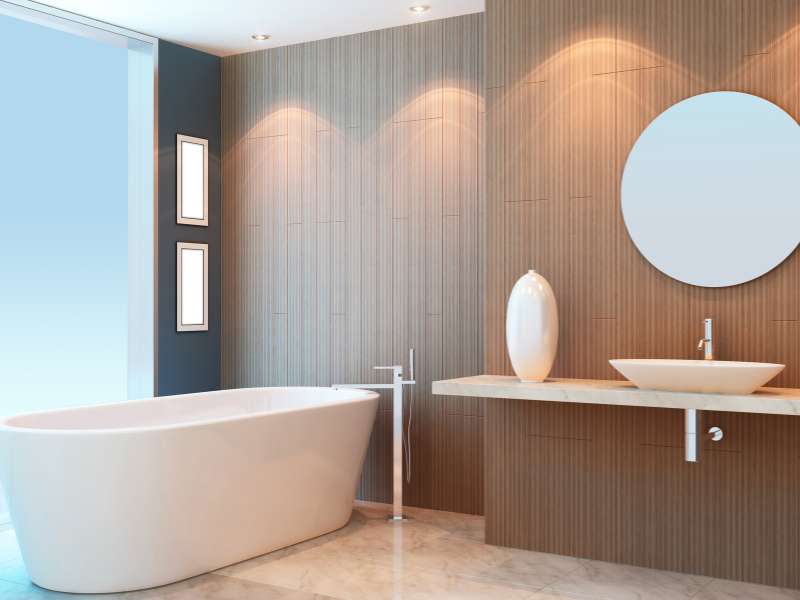
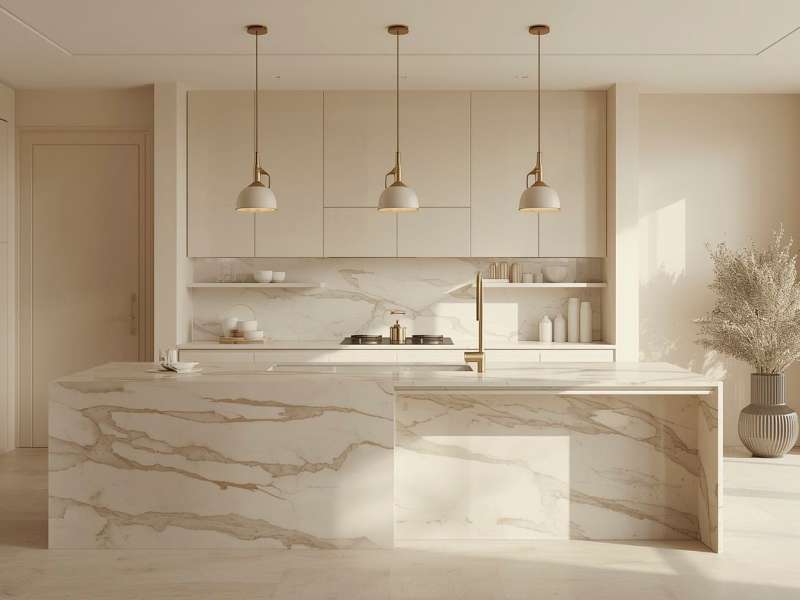
Kitchens and bathrooms are particularly important. These are among the most expensive areas to renovate and have a disproportionate influence on a buyer’s perception during a viewing. A modern, well-maintained kitchen can significantly enhance the perceived value of a property, even if the rest of the home is in average condition.
Conversely, an outdated kitchen or bathroom can reduce the achievable selling price more than the actual renovation costs would justify, simply because they negatively affect the emotional impression of the property.
When selling properties professionally, we take these factors into account and collaborate with architects and designers to provide realistic and well-founded valuations.
The Hedonic Valuation Method: Bringing All Factors Together
All of these factors – location, age, size, condition, and architectural style – are systematically recorded and weighted in professional property valuations. The methodology used is known as hedonic valuation.
What does “hedonic” mean? The term is derived from the Greek word hedone, meaning pleasure or satisfaction. In economics, the hedonic method describes an approach in which the price of a good is broken down into the value contributions of its individual characteristics.
For real estate, this means that thousands of actual transaction records are analysed statistically to determine how much each characteristic – location, living space, year of construction, condition, and so forth – contributes to market value. The result is a model capable of calculating a statistically supported market value for a specific property.
Hedonic valuation is the industry standard in Switzerland today. Banks, insurance companies, and professional valuers rely on this approach because it is transparent, data-driven, and objectively reproducible.
How Boutique Homes Values Properties
Boutique Homes offers two valuation options, depending on your situation and information needs.
Instant Valuation: Initial Guidance Within Minutes
The Instant Valuation tool is based on a simplified hedonic model. Using a few key inputs – location, size, year of construction, and general condition – it calculates an initial estimate of your property’s market value. The tool is free, non-binding, and provides results within minutes.
It is ideal for homeowners who are still in the early stages of considering a sale and would like a first indication of their property’s value range.
Expert Valuation: Comprehensive, Personal, and Tailored
An expert valuation by Stephanie Komminoth goes significantly further. In addition to standard valuation factors, it considers architectural character, the condition of individual building elements in detail, current regional market trends, and comparable local transactions.
The result is a comprehensive written assessment of market value, providing a reliable basis for sales decisions, price negotiations, or personal planning.
The expert valuation is personal, free of charge, and without obligation. If you want to truly understand the market value of your property, this is the right place to start.
Learn More About Our Expert Valuation →
Your Contact
Stephanie Komminoth
CEO • Real Estate Agent
✆ +41 77 423 83 88
✉ steffi@boutiquehomes.ch